


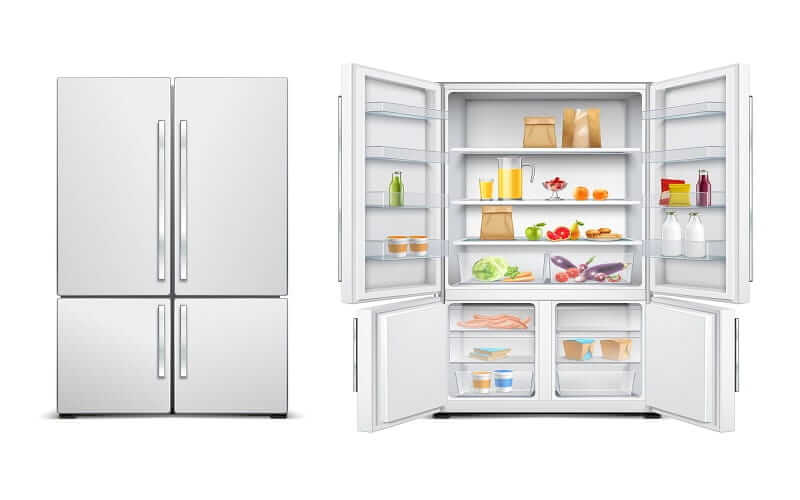
Whether you’re outfitting a dorm room, adding a beverage fridge to your home office, or upgrading your garage setup, a mini or compact refrigerator can be a smart investment — if you choose the right one. With dozens of models flooding the market at every price point, it’s easy to overspend on the wrong unit or end up with something that doesn’t meet your needs.
This guide breaks down everything you need to know before buying a mini or small refrigerator: the key specs that actually matter, what to watch out for, and how to keep your unit running efficiently for years to come.
WHAT COUNTS AS A “MINI” OR “SMALL” REFRIGERATOR?
The terms are used loosely, but generally
- Mini fridge: 1.7 to 4.5 cubic feet. Fits on a countertop or under a desk. Ideal for a single person.
- Compact fridge: 4.5 to 7.5 cubic feet. Freestanding, usually under-counter height. It’s good for small apartments, offices, or as a secondary fridge.
- Small refrigerator: 7.5 to 10 cubic feet. A step down from full-size, suitable for smaller households or studio apartments.
For reference, a standard full-size refrigerator ranges from 18 to 28 cubic feet.
7 THINGS TO CHECK BEFORE YOU BUY
1. Capacity — More Isn’t Always Better
The biggest mistake buyers make is overestimating how much space they actually need—or underestimating it. A 1.7-cubic-foot mini fridge sounds spacious until you realize it holds roughly 6 cans of soda and a small snack shelf.
Rough capacity guide:
- 1.7–2.5 cu ft: One person, beverages and snacks only
- 3.2–4.5 cu ft: One person, light meal prep, leftovers
- 5.0–7.0 cu ft: Two people, or a secondary fridge for a family
- 7.5–10 cu ft: Small household primary fridge
Measure your available space before shopping. Mini fridges vary significantly in footprint, and even a few inches can make a difference in a tight space.
2. Freezer Compartment — Do You Actually Need One?
Most mini fridges come in three configurations:
- No freezer: Maximum refrigerator space, better for beverages and produce
- Interior freezer compartment: A small built-in section inside the main cavity—good for ice packs and frozen meals, but can’t maintain true 0 degrees F
- Separate top freezer: A dedicated compartment with its own door—genuinely useful for storing frozen food long-term
If you only need cold drinks and snacks, skip the freezer and get more fridge space. If you need to store frozen food, look for a separate freezer compartment — the internal “frost box” style won’t suffice.
3. Noise Level — Often Overlooked, Rarely Forgiven
Mini fridges can be surprisingly loud. If you’re placing one in a bedroom, home office, or studio apartment, noise level matters enormously.
Compressor fridges (the most common type) cycle on and off, producing a low hum that some people find distracting at night.
Thermoelectric fridges (like many Cooluli models) run silently but cool less efficiently — they’re best in environments that are already cool, and they can’t maintain very low temperatures.
Look for noise ratings in decibels (dB) in product specs. Anything under 40 dB is considered quiet. Most well-reviewed bedroom mini fridges run 35–38 dB.
4. Energy Efficiency — Small Fridges Can Have Big Bills
A mini fridge runs 24/7, so its energy consumption adds up. Older or budget models can surprisingly draw as much power as larger modern refrigerators.
Look for Energy Star-certified models. An Energy Star mini fridge typically uses 20–30% less energy than non-certified units, which can translate to $20–$40 in annual savings.
Also check the annual kWh figure in the product specs (usually listed on the yellow EnergyGuide label). For a 4.5 cu ft fridge, anything under 200 kWh/year is efficient.
5. Temperature Control — Not All Are Equal
Some mini fridges only have a basic dial (1–7, min to max) with no actual temperature readout. This is fine for beverages, but problematic if you’re storing medication, breast milk, or food that needs to stay below 40 degrees F.
For food safety, look for:
- Adjustable temperature control with a clear range (e.g., 35°F–45°F)
- A built-in thermometer display, or plan to buy a small fridge thermometer separately (~$8)
If you’re storing wine, get a purpose-built wine cooler—it maintains the specific temperature range (50–65°F) that wines need, which standard mini fridges aren’t designed for.
6. Interior Layout and Shelving
Things to check:
- Adjustable shelves: Essential if you want to store taller bottles or containers
- Door bins: Good for cans, small bottles, condiments
- Crisper drawer: Useful for produce, though many mini-fridges skip it
- Can dispenser: A nice feature if you’re primarily using the fridge for beverages
Glass shelves are easier to clean than wire racks, but they can crack. For garage or workshop use, wire shelves are more durable.
7. Brand Reliability and Repairability
Budget mini fridges from no-name brands often fail within 2–3 years, and parts are impossible to find.
Brands with strong reliability records for compact refrigerators:
- Whirlpool and Maytag (compact models): Well-regarded, parts widely available
- GE: Solid build quality, good customer support
- Frigidaire: Popular choice for compact fridges, consistent performance
- Midea: Strong value for the price, increasingly good quality control
- Danby: Canadian brand, excellent reputation for compact and speciality fridges
As appliance repair technicians serving South Florida, the team at Express Xpert (https://expressxpert.com) regularly sees what brands hold up and what brands don’t. Compressor issues and thermostat failures are the most common repair calls on mini fridges—and they’re almost always on budget units from unknown manufacturers where replacement parts simply don’t exist.
MINI FRIDGE PLACEMENT TIPS
Where you place your mini fridge affects both its performance and lifespan:
Ventilation matters. All refrigerators need airflow around the compressor (usually at the back or bottom). Leave at least 2–3 inches of clearance on all sides and the top.
Avoid extreme temperatures. Mini fridges in garages struggle in Florida summers — if the ambient temperature gets above 90°F, the compressor has to work overtime and may fail prematurely.
Level it properly. An unlevel fridge causes the door to not seal correctly, which wastes energy and can cause the compressor to run continuously.
Keep it away from heat sources. Placing a mini fridge next to a stove, in direct sunlight, or near a heating vent makes it work significantly harder to maintain its temperature.
WHEN TO REPAIR VS. REPLACE A MINI FRIDGE
Mini refrigerators have a typical lifespan of 6–10 years with proper care.
Repair it if:
- The unit is less than 5 years old
- The repair cost is under 50% of the replacement cost
- The issue is a minor component (thermostat, door gasket, fan)
Replace it if:
- The unit is 7+ years old
- The compressor has failed
- Parts aren’t available, or the repair cost exceeds half the replacement value
- Energy consumption is high compared to modern models
A common repair that’s usually worth doing: door gasket replacement. A worn gasket causes the fridge to run constantly and spike energy bills.
A common repair that’s often not worth it: compressor replacement on a budget mini fridge. Labor plus the part often exceeds the cost of a new unit.
TOP MINI FRIDGE PICKS BY USE CASE
Best for dorms and bedrooms: Frigidaire FFPE3322UM (3.3 cu ft, quiet, Energy Star)
Best for beverages: Danby DAR044A4BSLDD (4.4 cu ft, glass shelves, sleek design)
Best for offices: Midea WHS-65LB1 (1.6 cu ft, compact footprint, reversible door)
Best for garages: Gladiator GAFZ21XXRK (4.4 cu ft, built for temperature extremes)
Best for wine: NewAir AWC-270E (27-bottle capacity, dual zone, quiet compressor)
Best value overall: Midea WHD-113FB1 (3.1 cu ft, Energy Star, adjustable shelves)
FINAL THOUGHTS
A mini or compact refrigerator is a straightforward purchase when you know what to look for. Prioritize capacity for your actual needs, energy efficiency, and noise level for your environment, and stick with brands that have a track record of reliability and available parts.
And remember — even the best mini fridge needs a little maintenance. Clean the coils once a year, check the door seal periodically, and make sure the unit has proper ventilation. A well-maintained compact fridge can easily hit 10+ years of reliable service.