
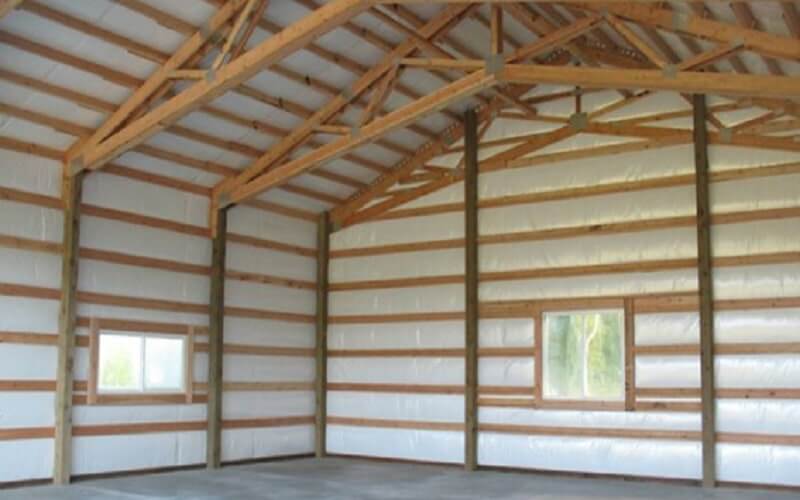
When it comes to building structures—whether for agricultural, commercial, or even residential use—choosing the right framing method is critical. Two of the most commonly used techniques are post-frame construction (often called pole building) and traditional stick framing. Each method comes with distinct structural, economic, and functional differences that any builder should understand before starting their project. This guide dives into the essentials every builder needs to know to further improve efficiency.
What Is Post-Frame Construction?
Post-frame construction uses large vertical posts or poles as the primary structural support. These posts are typically embedded directly into the ground or anchored on concrete foundations spaced widely apart—often 8 to 12 feet or more. Horizontal girts and purlins connect the posts, providing lateral stability and surfaces for wall and roof material attachment.
This framing method eliminates the need for load-bearing interior walls and allows for large, open interior spaces ideal for workshops, barns, warehouses, and even residential spaces. Due to fewer studs and framing members, post-frame structures often require less wood and labor compared to traditional stick framing.
What Is Traditional Stick Framing?
Traditional stick framing, also called platform framing, is the classic building method used mainly in residential and light commercial construction. In this technique, walls are built from numerous evenly spaced vertical studs (often 16 or 24 inches on-center) set atop a continuous foundation like a slab or crawl space.
The load of the roof and upper floors is transferred through these closely spaced studs, which create a solid framework. Stick framing is valued for its design flexibility and ability to accommodate multi-story buildings, interior walls, and architectural complexity.
Key Differences Between Post-Frame and Traditional Framing
1. Structural Support & Foundation
- Post-Frame: Utilizes fewer large posts set relatively far apart that carry the majority of the building load directly to the ground, often with less extensive foundation work. This reduces excavation, concrete, and site preparation costs.
- Traditional Framing: Requires a continuous foundation (slab, crawl space, or basement) to support many smaller studs spaced closely. This foundation is more expensive and increases site prep time.
2. Construction Speed & Labor
- Post-Frame: Faster to construct due to less framing complexity and fewer components. Many elements can be pre-cut or pre-assembled, cutting labor costs and speeding timelines.
- Traditional Framing: More labor-intensive, involving building numerous wall sections piece by piece on-site. This generally increases construction time.
3. Interior Space Flexibility
- Post-Frame: Wide spacing between posts and no load-bearing interior walls creates large open interiors that are easily customizable for different uses.
- Traditional Framing: Interior layouts can often require load-bearing partitions, limiting open-plan designs without additional engineered supports.
4. Material Use & Cost Efficiency
- Post-Frame: Typically uses less lumber overall due to widely spaced posts and efficient roof truss systems. This can reduce both material costs and waste.
- Traditional Framing: Uses more dimensional lumber for studs, joists, and headers, increasing overall material expense.
5. Energy Efficiency Potential
- Post-Frame: Larger wall cavities between posts simplify installing continuous and thicker insulation, allowing for better sealing and energy retention. This is where energy-saving pole barn insulation blankets shine—these blankets fit well between spaced posts and provide superior thermal protection, reducing heating and cooling costs.
- Traditional Framing: Narrower cavities and more framing “thermal breaks” between studs make insulation installation more complex and can reduce effectiveness.
Why Builders and Owners Choose Post-Frame Construction
- Cost Savings: Less concrete foundation, reduced lumber, and faster build times translate to lowered construction costs.
- Structural Strength: Posts anchored deep in the ground provide excellent load transfer and resistance to wind and snow loads.
- Open Interior Layouts: Perfect for uses requiring wide open spaces, such as machinery storage, workshops, or large commercial areas.
- Energy Efficiency: Ample space for installing quality insulation products, like pole barn insulation blankets, allows for significant energy savings.
- Adaptability: Expansions and modifications are simpler, often requiring breaking through open bays instead of load-bearing walls.
When Traditional Stick Framing Is Preferable
- Multi-Story or Complex Floor Plans: Traditional framing offers more flexibility for multi-level homes and intricate architectural designs.
- Urban or Residential Builds: Stick framing is often the default for homes and smaller buildings where aesthetics and building codes favor traditional methods.
- Tighter Site Restrictions: Properties with strict foundation requirements or small lots sometimes favor traditional framing due to foundation constraints.
Enhancing Post-Frame Buildings with Insulation Blankets
One of the biggest advantages of post-frame construction is the ability to easily integrate highly effective insulation. Energy-saving pole barn insulation blankets are specially designed to fit the large cavities between posts, providing:
- Superior thermal resistance and reduced thermal bridging compared to traditional batt insulation.
- Easier installation with fewer cuts and seams.
- Enhanced moisture control and air sealing, improving indoor comfort year-round.
- Potential energy cost reductions that make post-frame buildings both eco-friendly and economical to operate.
Many builders recommend combining these blankets with vapor barriers and reflective roof liners for optimum results.
Both post-frame and traditional framing methods have their place in modern construction. Post-frame construction is unbeatable for its cost-effectiveness, speed, open interior possibilities, and synergy with high-performance insulation like pole barn insulation blankets. It is especially well-suited for agricultural buildings, shops, garages, and even innovative residential designs seeking durability and energy efficiency.
Conversely, traditional stick framing remains a versatile option for detailed architectural projects, multi-story homes, and dense urban settings.
Understanding these core differences empowers builders and property owners to make informed decisions that align with budget, timeline, functional needs, and long-term comfort.
Ready to build smarter and greener? Explore post-frame options and optimize your structure for lasting value, durability, and efficiency.